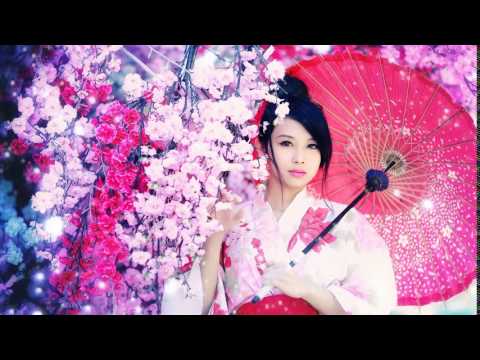
Tuesday, December 6, 2022

Big Blog 2! One Last Music Culture: Japanese Music

Hello! I apologize for this being late, but congrats to everyone for making it this far in this semester! We're finally done - or at least almost done!

Now to get to the main point of this blog: Japanese music. Throughout all of the musical cultures we discussed throughout this semester, the Japanese music culture still remains as the one I'm most invested and interested in. So naturally, I wanted to write at least one blog discussing this culture in this class! And I'm glad I finally can - even despite being in the form of a long, overdue, probably too-late-to-be-graded-and-much-less-seen-at-all blog. 

Now there's one thing I'd like to note: even despite being a small strip of land, Japan is still an entire country with a long history and multiple different cities. Naturally, then, Japan is still quite the broad topic with a relatively diverse culture. So I'll be discussing this topic via different, specific categories! Only the most prominent ones, however, as it would be impossible to touch upon every single smaller one as well.

Traditional Music


First off, traditional music in Japan - aka hogaku (邦楽, "homeland's music"). This is the kind of music that many people automatically associate with Japan - especially back then (around 5 years ago and more), back when anime wasn't as popular internationally-wise at all. It's primarily characterized with gentle vocals and melodies - created with traditional instruments such as the koto, a long, wooden board zither with 13 or so pluckable strings and movable bridges. Here's a video exemplifying its sound:


Traditional Japanese music actually has multiple sub-genres and periodical differences, however. The sub-genres in question are Japanese folk music (min'yō民謡"folk/people song"), Japanese court music, Japanese theatre music, and Japanese instrumental music. Each one emerged and prevailed during different eras of time - though all before the Meji period (1868-1912), the period when Western influences completely dominates and influences Japanese music. 

Japanese folk music in particular is the oldest out of all of the Japanese traditional music sub-genres. It's also the most prominent sub-genre out of the others under the traditional Japanese music category - hence why I placed a video example of it above. Japanese folk music first dates back to around the 6th-7th century, back when the Yamato clan (the very first Japanese clan, where over 90% of today's Japanese residents descended from) first settled into Japan. Since the aboriginal Ainu people were already living there, the Yamato Japanese people kept discriminating against and pushing the Ainu people back more and more over time. Part of the Ainu people's music nevertheless influenced part of the Yamato Japanese people's developing folk music culture, however. Even the nearby countries of China and Korea influenced part of it - especially China.  

Japanese folk music can also be recognized as one of its two main forms as well: shōmyō and gagaku. For shōmyō, it refers to liturgical/ritualistic Buddhist chants in Buddhist and Japanese folk music. It's primarily sung by multiple Buddhist monks during a Buddhist ceremony. As for gagaku, it refers to imperial theatrical court music. Its instrumental form is referred to as kigaku, while its vocal form is referred to as seigaku

Gagaku is also directly related to the aforementioned sub-genres of Japanese court music and Japanese theatre music. The latter is known for its two most prominent forms: the kabuki and noh forms. Both are prevalent in Japanese theatrical history, and possibly even in some international theatrical studies in general. While kabuki is highly stylized and elaborate with its aspects, noh is more classical with a more limited tonal range. The latter in particular includes many negative blank spaces, along with a musical accompaniment of a hayashi ensemble: three drummers and a flautist (flute player). Kabuki is still generally more well-known, however. Here's an example of Kabuki music:


Unlike the other sub-genres, however, Japanese instrumental music includes no vocals. The lack of vocals doesn't make this sub-genre any less relevant than the other sub-genres (perhaps aside from Japanese folk music). It instead relies on delivering a deeply artistic and ritualistic feel with its percussion, wind and stringed instruments. It especially tends to imitate the sounds of nature and life, and even include plenty of silence and scattered, "ma"-based rhythms. 


J-Pop Music


Now for the second most commonly-associated music genre with Japan: J-pop music! Aka my favorite music genre. It's an extremely vast music genre, however. It includes sub-genres such as: standard pop music with singers, band music, J-rock, K-pop like music, idol music, anime music, and even Vocaloid music. J-pop as a whole is one of the most popular music genres in Japan's modern society - to the point where it's even somewhat popular overseas as well. 

Regarding standard pop music, it's actually quite similar to Western pop music. Music accompaniments and vocals are just as simple yet catchy and disconjunct, for one thing. Rather than traditional percussion and wind instruments, there's use of modern band and electronic instruments as well. Notable soloists such as Yuuri and Yoko Ono will sing in music studios, then release new singles or albums in both the physical and digital sense. Physical CDs are still much more prominent in Japan than they are in modern-day America, however. CDs in general are just still a significant part of Japanese popular culture - especially since most people walk their way around, aside from boarding buses and trains. So they can much more easily just find and stop by CD stores whenever they'd like to. 

Band music is also quite self-explanatory. Like in America, Japanese bands seem to often comprise of all men. Their songs carry similar popularity and CD usage in Japan, so it's just as difficult not coming across any Japanese bands as it is to come across any Japanese soloists. Some notable examples are X-Japan and The Gazette - which both also happen to primarily fall under the J-rock sub-genre, with specific forms such as heavy metal and visual kei (similar to heavy metal, involves heavy makeup as well). Another band example I also happen to come across often is BUMP OF CHICEKN, which also is a rock band that has created several popular hits - including (but not limited to) anime-themed ones, such as "ray" (a song that was even covered and added to one of Japan's currently most-downloaded mobile games, "Project SEKAI COLORFUL STAGE! feat. Hatsune Miku") and "SOUVENIR" (also used as the opening song of Spy x Family's - one of this year's most popular anime - second season). Here's even a Pokémon-themed one of theirs that blew up 2 years ago!: 


This was definitely a super wonderful surprise for many Pokémon fans and players like myself to come across - especially if we've already been invested in this franchise ever since our childhood. 

There's also the J-pop artist side that's essentially the Japanese version of K-pop: soloists or groups of singers, constantly training their singing, dancing, and visual charms for MVs, concerts, and promotional activities under agencies. While this sub-genre is definitely not as prevalent as K-pop is, this side of J-pop is still nevertheless quite popular. This is noticeable in how some of the songs included in top J-pop songs (like two videos above) are of K-pop-like J-pop artists. One of the most prominent ones so far is NiziU, an all-female group who also happens to work for JYP Entertainment - one of the biggest K-pop agencies in Korea. 

Similar to such artists are also Japanese idols, who - unlike Japanese bands - are dominantly female. Just like K-pop-like J-pop artists, idols sing and dance on stage, and release their songs via CD albums online and offline. They're much more known for their cuter and lighthearted aesthetic, however. Idols even serve as one of the most common basis's for Japanese anime (especially Love Live!, an extremely well-known school idol anime franchise that most international fans like myself seem to have learned about idols from). It's also worth noting that even though soloists can exist in this genre as well, Japanese idols are still prominently groups - especially of around 5 or more members. A very popular example is AKB48, a group of 5 teams of female idols (counting a total of 72 members - yes, 72 - as of August 2022) based in a theater in Akihabara, Tokyo. Here's an example of one of their most popular songs: 


Based on my experience with anime idol songs alone, this song SCREAMS female idol music. Even though the idol outfit styles here seem to be somewhat old fashion (which is understandable, given this is a song from 2011). 

Speaking of anime idol songs, anime-themed songs in general are one of the biggest and most well-known parts of the J-pop music genre. It's not at all just limited to anime idol music; it extends to anime openings, anime endings, anime OSTs, and even anime game OSTs and Vocaloid music. This sub-genre as a whole tends to be the one that draws many anime fans to the J-pop world as a result. Especially anime openings and endings, such as "Hitamuki" by Super Beaver - the opening song to My Hero Academia's (one of the current most popular animes both in Japan and worldwide) 6th season - and "Akuma no Ko" by Ai Higuchi - the ending song to Attack on Titan's (also an extremely popular anime for an unusually long time) final season. 

I haven't watched either anime's season yet, but I have definitely heard from peers that My Hero Academia's new opening was really good - and I have personally listened to "Akuma no Ko" already, too. A... lot, actually. It's very, very, VERY good, both lyric-wise and music-wise.

Another popular yet complicated anime-themed sub-genre is Vocaloid music. Vocaloids in particular are defined as singing voice synthesis softwares used in place of vocalists. Each one of them carries a voice bank made from an existing voice actor's sounds (with permission, of course). Each Vocaloid is also represented with a distinct anime character avatar, such as Miku Hatsune (much more commonly known by her Asian name order, Hatsune Miku) - the most well-known and popular Vocaloid worldwide. Here's a picture of her for visual reference:


Vocaloids in general are often used by anyone who'd like to - or can only - produce music without relying on their own or someone else's vocals. How it works is that said softwares' voice banks are bought online, then used to assemble their sounds into lyrics and melodies within a different music composition computer program. Whatever genre said melodies are created for are entirely up to the people themselves - though due to this modern day age, Japanese pop music is naturally the most common genre Vocaloid music is made for. The overall Vocaloid sub-genre is complicated yet amazing, and has proven to be so vastly popular of a media that top J-pop song charts tend to include Vocaloid songs as well. Vocaloids are even popular enough to be the main theme of one of the currently most downloaded mobile games in Japan (as mentioned earlier: "Project SEKAI COLORFUL STAGE! feat. Hatsune Miku").

Even singers often love to cover whatever Vocaloid songs they happen to like - thus giving both themselves, the songs, and the songs' producers more exposure in the Japanese music world. Said singers are actually referred to as utaites - deriving from the commonly used phrase of "utattemita" (歌ってみた, literally translates to "tried to sing") in place of "cover." Utaites can actually refer to anyone who covers any Vocaloid songs, even if they're not on the professional level. The more commonly-known utaites are most definitely on the professional kind, however. Such as Mafumafu, who is the most well-known utaite - and who also actually often produces and sings to his own, original songs as well. His covers of Vocaloid songs are nevertheless often very popular, however - to the point where the songs he covers tend to be more associated with him rather than the producers themselves. Here's one of his most popular covers of "Hated by Life Itself" by Kanzaki Iori: (TW// depression)


The original song's vocals are of Hatsune Miku; hence why this is recognized as a Vocaloid song. It touches upon the very serious topic of depression, however - specifically of the feelings of wanting to die and being extremely alone and pained with constant hardships.

In general, it's actually not at all uncommon for Vocaloid songs to touch upon abstract and dark topics. In fact, it's less common to find Vocaloid songs that don't do this. This is due to how many Vocaloid producers like to touch upon the serious feelings that Japanese society has forced upon them with high expectations - such as academic expectations, gender role expectations, heteronormative expectations, and even expectations to be "ideal" and never talk about mental disorders/illnesses. It's definitely overall much less open as a society than ours. So naturally, many online users such as Vocaloid fans and producers tend to run to this sub-genre for escape. This even applies to international users, since it's also common for people in general to use the internet as an escape from the societies they're unable to really integrate in. 

Here's a very popular example of such themes: "Usseewa" (うっせぇわ, pronounced as oo-seh-wah - short for うるさい (urusaiwa), translating to "Shut Up") by Vocaloid producer Syudou. It's sung by Japanese singer Ado - though it's still regarded as a Vocaloid song due to Syudou's status as a Vocaloid producer. It narrates as a person whose happiness was compromised from being forced to abide by society's expectations as an honor student and ideal worker their entire life - and is thus criticizing this overly normalized social expectation in Japan.

There's also "Bug" by Vocaloid producer Kairiki Bear. It's sung by Hatsune Miku, though it was also created for a commission by "Project SEKAI COLORFUL STAGE! feat. Hatsune Miku." As a result, the cover used in said game is the most well-known and popular version of it. Here's both the original Vocaloid version and the game's cover I mentioned: (TW// flashing imagery, fear of disappointment, depression)


It's also common for more recent Vocaloid songs like this one to originate as a commission for the same game, too. The game is based on characters interacting with and singing Vocaloid songs with Vocaloid characters, after all (even though the game also pours heavier focus into the original characters' own stories than with the Vocaloid characters).  

Like almost any other Vocaloid song, this song's English translations can be found on the Vocaloid Lyrics Wiki and other sources. This song seems to narrate as a person who's dealing with constant fear of one day suddenly failing others' expectations of them - yet always bottling it all up, thus stepping dangerously closer and closer to actually doing it and/or falling into an EXTREME amount of despair. Even this explanation alone feels like an understatement, as even just the abstract lyrics and cover vocals really deliver the amount of fear you'd feel being stuck in any similar or identical situation. This song's also meant to be for the "Project SEKAI" character Mafuyu Asahina, who herself is an honor high school student struggling with severe depression - resulting from constantly bottling up her emotions while abiding by the ideal student expectations her parents forced onto her her entire life. The blond Vocaloid in the Project SEKAI cover - Kagamine Len - is also meant to represent Mafuyu's lost childhood innocence, which was already sacrificed to that situation. The other characters in the 2DMV don't relate to the song as much, even though they themselves do also suffer from depression due to other society-related reasons. This is indirectly revealed in their group's main story within the game.    


Conclusion

And that's about all! Even though I only separated Japanese music into two separate categories, it's still clear that there are so many other smaller categories underneath each one. There may even be a chance that I missed a sub-genre while looking around and writing this. Regardless, I hope I did an alright job explaining things.

Also, as a bonus: a syncretic anime ending song based on traditional Japanese (and Chinese + Korean) music! Based on hearing alone, it seems to include (but not limited to) the koto, flute, and even the Chinese instrument urhu! The aesthetic of traditional Japan is popular in Japanese modern culture, too, so there's plenty of things like anime songs based on it as well~ 


I really love this song, and the manga's a really wonderful read as well~ The song in question is "Akatsuki" (暁, translates to "Dawn") sung by Akiko Shikata - used as the second ending song for the anime adaptation of "Yona of the Dawn."


Works Cited

"Ado - うっせぇわ (Usseewa) (Romanized)." Genuis Lyrics. Web. https://genius.com/Genius-romanizations-ado-usseewa-romanized-lyrics 

"Akatsuki no Yona." MyAnimeList. Web. https://myanimelist.net/anime/25013/Akatsuki_no_Yona 

"AKB48." AKB48 Fandom Wiki, Web. https://akb48.fandom.com/wiki/AKB48 

"AKB48 Members." AKB48 Fandom Wiki, Web. https://akb48.fandom.com/wiki/AKB48_Members 

Anna. "3 Popular Japanese Rock Bands." JW Web Magazine, Updated 25 Aug 2020. Web. https://jw-webmagazine.com/popular-japanese-rock-bands/

Brown, Keith L. "Ethnic Diversity and the Origins of the Japanese." University of Pittsburgh. Web. https://www.japanpitt.pitt.edu/essays-and-articles/history/ethnic-diversity-and-origins-japanese 

"Bug." Project SEKAI Wiki. Web. https://projectsekai.fandom.com/wiki/Bug#English 

Chang, Ed. "Hogaku: Japanese Traditional Music." Blogspot, Web. https://japanesetradmusic.blogspot.com/ 

"Hatsune Miku: Rise of a Virtual Pop Star: What Is A Vocaloid?" Harrington School of Communication and Media, Updated 27 Jun 2019. Web. https://urilis.libguides.com/c.php?g=894968&p=6436235 

@knowledgable otaku. "Vocaloid." Urban Dictionary. 9 July 2010. Web. https://www.urbandictionary.com/define.php?term=Vocaloid 

"koto". Encyclopedia Britannica, 25 Mar. 2020. Web. https://www.britannica.com/art/koto.

Malm, William P.. "Japanese music". Encyclopedia Britannica, 19 Jan. 2021. Web.  https://www.britannica.com/art/Japanese-music.

Narabe, Kazumi. "Hôgaku: Traditional Japanese Music." The Japan Foundation: Performing Arts Network Japan, 9 Jun 2010. Web. https://performingarts.jpf.go.jp/E/overview_art/1005_09/1.html 

Sato, Yuu. "Top 20 Best Japanese Rock Bands You Shouldn’t Miss." Questionjapan, Updated 5 Feb 2021. Web. https://questionjapan.com/blog/best-japanese-rock-bands/ 

"TRADITIONAL JAPANESE MUSIC: YOUR COMPLETE GUIDE." audionetwork, 4 May 2021. Web. https://www.audionetwork.com/content/the-edit/expertise/traditional-japanese-music  

"Usseewa." Wikipedia. Web. https://en.wikipedia.org/wiki/Usseewa (sorry, but there's hardly any sources on this song. The lyrics tell it all anyway)

"Utattemita." Nico Nico Douga Singer´s Wiki. Web. https://utaite.fandom.com/wiki/Utattemita 

"What is Vocaloid?" Wonderopolis. Web. https://wonderopolis.org/wonder/What-Is-Vocaloid 

Yusuke-s. "10 Most Popular Free Game Apps in Japan 2022." JW Web Magazine, 31 Aug 2022. Web. https://jw-webmagazine.com/most-popular-free-game-apps-in-japan-2022/

"6 Best Japanese Bands You Have To Listen To!" JapanTruly, 18 Feb 2022. Web. https://japantruly.com/best-japanese-bands/ 

"うっせぇわ (Usseewa)." Vocaloid Lyrics Wiki. Web. https://vocaloidlyrics.fandom.com/wiki/うっせぇわ_(Usseewa) 

Big Blog 2! One Last Music Culture: Japanese Music

Hello! I apologize for this being late, but congrats to everyone for making it this far in this semester! We're finally done - or at lea...